Key Takeaways
- Ozempic face, the facial volume loss that can accompany rapid weight loss on GLP-1 medications, is treatable through non-invasive and clinical approaches.
- Facial massage, lymphatic drainage, and a consistent skincare routine can support skin tone and collagen production without downtime.
- Dermal fillers and energy-based skin tightening offer more targeted results for volume loss, though they require maintenance.
- Stretch*d’s Face*ssage supports facial muscle tone and lymphatic flow as part of a broader treatment plan.
Many people on GLP-1 medications like Ozempic notice facial changes as they lose weight, from hollow areas to looser skin. This may not be your end goal. This guide covers non-invasive, clinical, and lifestyle-based approaches to treat Ozempic face so you can choose what fits your goals.
Recognizing the Signs of Ozempic Face
Ozempic face refers to the facial volume loss that can occur with rapid weight loss on GLP-1 medications like semaglutide. Facial fat diminishes in areas like the cheeks, temples, jawline, and under the eyes, creating hollow cheeks, a sunken or gaunt appearance, and sagging skin.
Fine lines and wrinkles may become more noticeable as skin loses underlying support. These changes tend to appear gradually alongside significant weight loss.
Non-Invasive Treatment Options
Several non-invasive approaches can support facial fullness and skin tone without clinical procedures.
Facial Massage and Manual Therapy
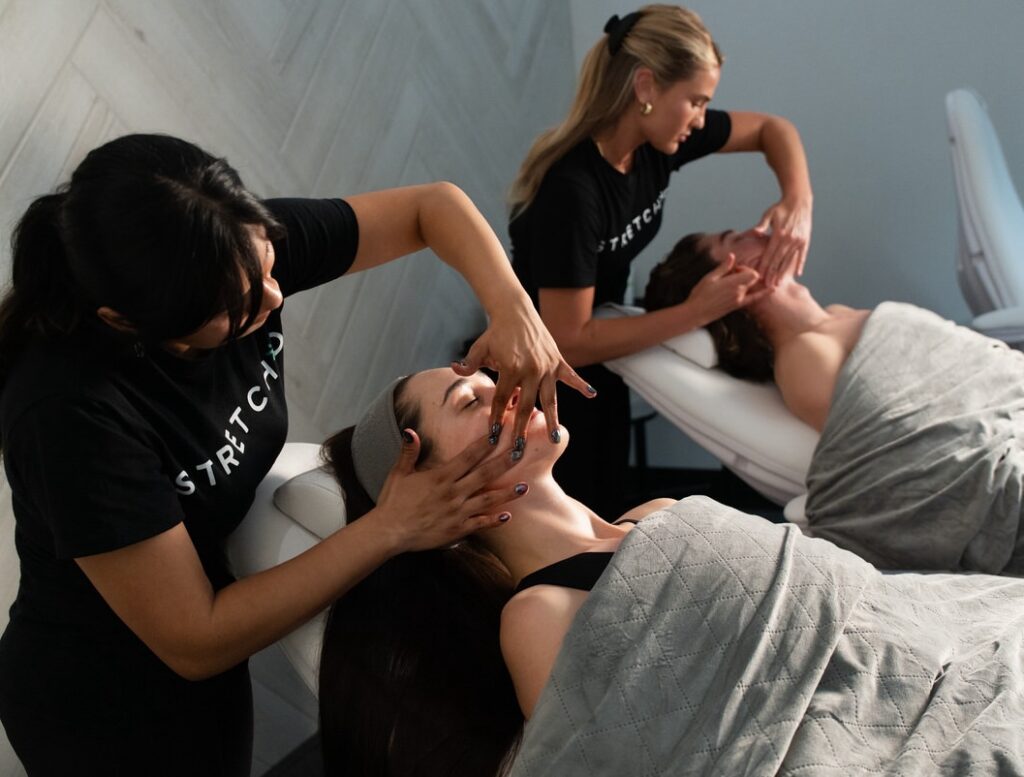
Trained practitioners release tension in the jaw, cheeks, and neck while supporting facial muscle tone and contour. Manual therapy may help activate underused facial muscles for a more lifted appearance.
Regular sessions can also support circulation and lymphatic flow in the face and neck area. A professional face massage offers targeted work beyond what at-home techniques achieve. The good thing is that the benefits of facial massage go beyond, it promotes relaxation and supports recovery.
Lymphatic Drainage
Gentle, rhythmic lymphatic drainage movements can help reduce fluid retention and puffiness. Many people notice a more refreshed, defined look after consistent sessions.
Skincare and Topical Support
A consistent daily skincare routine can support collagen production and hydration. Key ingredients to look for include:
- Hyaluronic acid for deep hydration and a plump, moisturized surface
- Retinoids for stimulating collagen renewal and smoothing fine lines
- Peptides for supporting skin elasticity and firmness over time
A simple routine used daily tends to outperform elaborate regimens used sporadically.
Clinical and Aesthetic Treatment Options
When non-invasive methods are not enough, clinical treatments can address volume loss more directly.
Dermal Fillers
Hyaluronic acid-based fillers can restore facial contours by adding volume to the cheeks, temples, nasolabial folds, and marionette lines. Results are temporary, typically lasting six to eighteen months, and require maintenance.
Energy-Based Skin Tightening
Radiofrequency and ultrasound devices stimulate collagen and elastin production beneath the skin’s surface. Results build gradually over multiple sessions.
Some providers combine these treatments with microneedling, which creates controlled micro-injuries that further encourage collagen and elastin production.
Lifestyle Changes That Support Treatment Results
Daily habits can reinforce the benefits of both non-invasive and clinical treatments.
Nutrition and Hydration
Adequate protein and healthy fats give the body building blocks for collagen production and skin health. Drinking plenty of water supports skin elasticity and a more youthful texture.
Strength Training and Recovery
Preserving muscle mass during weight loss supports overall body composition and may help maintain facial contour. Resistance training signals the body to hold onto lean tissue.
Full-body recovery practices, including stretching and manual therapy, support the muscular system that frames your face.

Choosing the Right Approach for You
Consider your goals, budget, and comfort level with invasive options when building a treatment plan. Starting with non-invasive approaches like facial massage and skincare allows you to see what your skin responds to before exploring clinical options.
Combining methods often works well. For significant volume loss, consulting a plastic surgeon about plastic surgery options like a facelift or neck lift may be appropriate.
How Stretch*d’s Face*ssage Supports Treatment Goals
Stretch*d’s Face*ssage is a non-invasive, recovery-aligned approach to facial manual therapy. Trained practitioners use targeted techniques to release tension, support muscle activation, and encourage lymphatic flow for a more youthful contour. For deeper work, buccal face massage targets tissue inside and outside the mouth.
Whether you are exploring treatment for Ozempic face or simply want to support your skin’s vitality, Face*ssage fits into a broader wellness routine. Book a session for face massage in NYC or face massage in Encinitas to experience the difference skilled manual therapy can make.
Sources:
- Daneshgaran, G., Shauly, O., & Gould, D. J. (2025). “Ozempic Face” in plastic surgery: A systematic review of the literature on GLP-1 receptor agonist mediated weight loss and analysis of public perceptions. Aesthetic Surgery Journal Open Forum. https://academic.oup.com/asjopenforum/article/doi/10.1093/asjof/ojaf056/8160112
- Ahn, S. H., Hwang, U. J., Han, H. S., Kim, J. H., Lee, H. J., Jeon, Y. R., Lee, H. H., & Hwang, A. H. (2025). Comparative effects of facial roller and gua sha massage on facial contour, muscle tone, and skin elasticity: Randomized controlled trial. Journal of Cosmetic Dermatology. https://onlinelibrary.wiley.com/doi/epdf/10.1111/jocd.70236
- Li, H. Y., Cheng, F. C., & Chiang, C. P. (2025). The manual lymphatic drainage of physical therapy for care of the facial swelling and pain after oral and maxillofacial surgery. Journal of Dental Sciences, 20(3), 1934–1936. https://doi.org/10.1016/j.jds.2025.03.006
- Milani, M., & Sparavigna, A. (2017). The 24-hour skin hydration and barrier function effects of a hyaluronic 1%, glycerin 5%, and Centella asiatica stem cells extract moisturizing fluid: An intra-subject, randomized, assessor-blinded study. Clinical, Cosmetic and Investigational Dermatology, 10, 311–315. https://www.dovepress.com/the-24-hour-skin-hydration-and-barrier-function-effects-of-a-hyaluroni-peer-reviewed-fulltext-article-CCID
- Milosheska, D., & Roškar, R. (2022). Use of retinoids in topical antiaging treatments: A focused review of clinical evidence for conventional and nanoformulations. Advances in Therapy, 39, 5351–5375. https://link.springer.com/article/10.1007/s12325-022-02319-7
- Oral and topical peptides for skin aging: Systematic review and meta-analysis of randomized controlled trials. (2026). Frontiers in Medicine. https://www.frontiersin.org/journals/medicine/articles/10.3389/fmed.2026.1618306/full
- Radiofrequency-based treatments for facial rejuvenation: A systematic review of efficacy, safety, and patient-centered outcomes. (2025). Aesthetic Surgery Journal Open Forum. https://academic.oup.com/asjopenforum/article/doi/10.1093/asjof/ojaf159/8355023
- Sanchis-Gomar, F., Neeland, I. J., & Lavie, C. J. (2025). Balancing weight and muscle loss in GLP-1 receptor agonist therapy. Nature Reviews Endocrinology, 21, 584–585. https://www.nature.com/articles/s41574-025-01160-6